Sometimes in discussions about types of adventure games you hear the word “Needleventure” thrown around. It’s a pretty ambiguous term without a clear definition but the general sentiment is some fusion of adventure and needle that makes for something more platforming oriented, and sometimes comes from the maker being primarily a needle maker. This obviously implies that the opposite exists, some “Avoidanceventure” genre that combines elements of avoidance and adventure into one game. I personally think that exists whenever you see primarily avoidance makers try to make adventure games and it leads to some of the most interesting fangame design I’m personally familiar with.
I think Cyber (サイバー) is one of the most interesting makers in this regard. It should definitely be noted that even outside of his adventure games, Cyber’s fangame portfolio is a bit strange in some respects. His avoidance design is iconic with all the Taisas and I Wanna Be The Barrage but stuff like Black Colonel and nearly everything he made in Music 2 and the boss at the end of I Wanna Be The T can just be extremely bizarre.
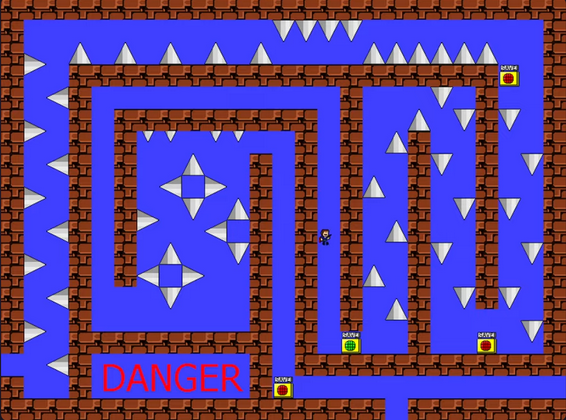
I think I Wanna Be The Black is pretty established to be a strange game so I wanna put more attention to I Wanna Be The Maze which I think is one of the most interesting adventure games I’ve played. There’s certainly points in the game where it feels like the average thing you’d expect from an old Japanese adventure game. This screen is pretty blatantly based on LoveTrap for instance like basically any game like this would be:
But then the game has other stuff which is just unorthodox:
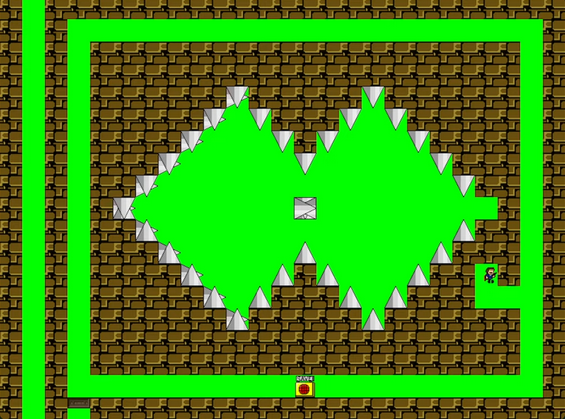
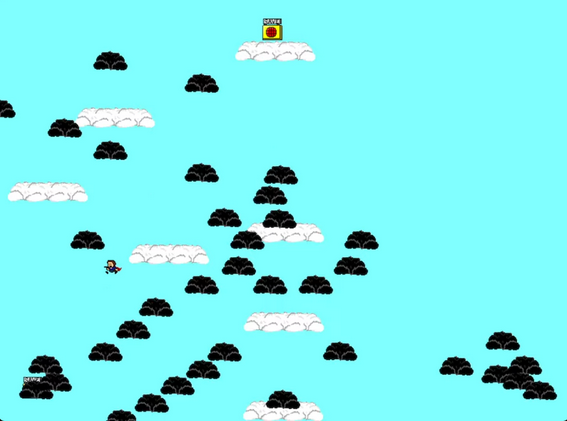
Even in the cases where you see a more “normal” room it feels like the block design is pretty out there:
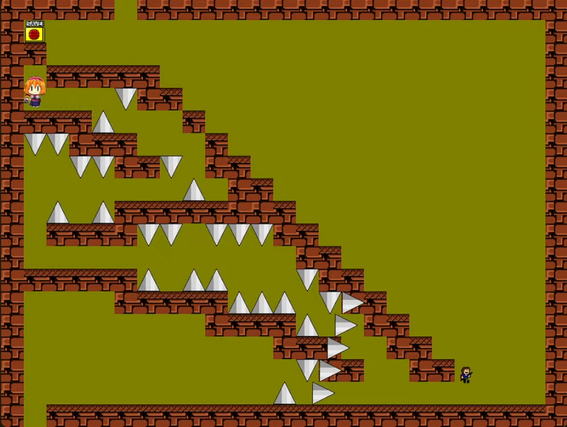
Compare this to more standard old adventure game rooms such as these from Lunatic and Device respectively:
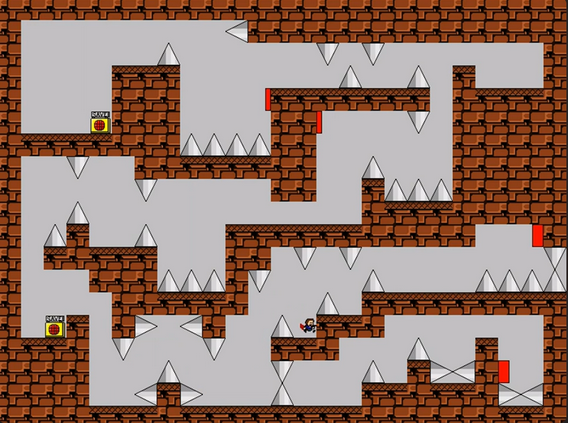
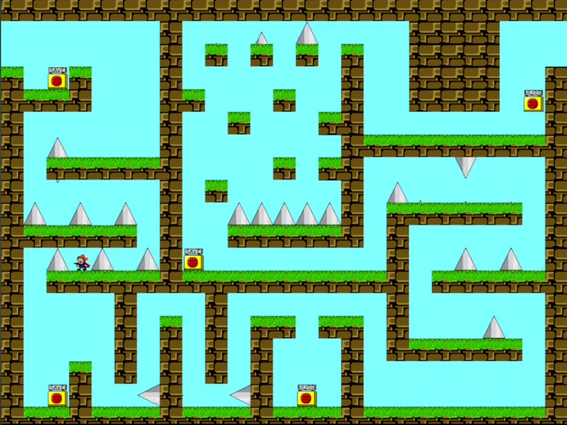
Even something like Device isn’t that standard but I think it’s pretty clear from just skimming through these games that something about Maze is really out there compared to general design conventions at the time. There’s this kind of design that you see a lot in older games where you have some concept that’s used for one screen and then not expanded on. More standard gimmick design is more akin to the stuff you see in regular platforming video games, with the introduction of an idea, and then expansion on it. Even a game like LoveTrap has this to some extent but then a game like Charr is the opposite, a game which will just throw an idea out there and then it’s never seen again (Especially true for the red coins in this game.) I think Maze is an even more extreme example of this design philosophy. You really never know what the next screen will be in maze, sometimes it’s standard platforming with traps, sometimes it’s something with tons of triggers, sometimes it’s a giant room with a bunch of rising and lowering platforms, and sometimes it’s a miniboss out of nowhere. It’s the kind of gameplay that you don’t find in many places that aren’t fan-made works that don’t follow general game design conventions that people tend to expect.
I think another thing that adds to a game like this are “setpieces” or sections or visuals that stick with you even after you finish the game. Maze is absolutely stuffed with these kinds of things. I think the one that sticks out to me the most is the save before the Piano avoidance.
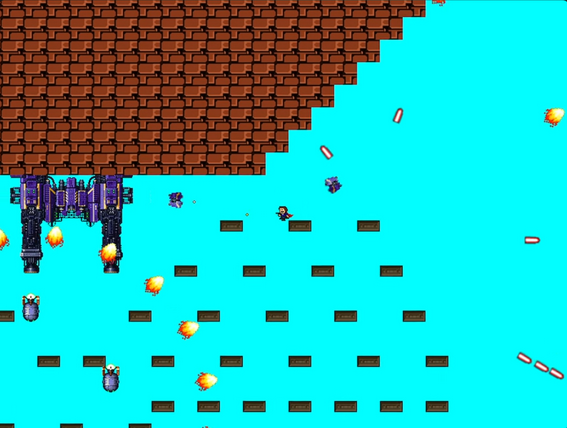
It’s such a random little thing, just a mini boss fight right before the most iconic thing in the game. I remember seeing this screen as a kid and finding it really interesting. Something about the array of platforms and the large block structure above and the strange out of place looking machine in the middle just made for such a memorable thing even when my 13 year old brain was being ravaged by my obsession with Kamilia 3. To me this is basically the epitome of a “setpiece” since it’s something that stuck with me even when I knew nothing about the rest of the game outside of Piano. Apparently this is a reference to “Castle in the Sky” which I learned very recently. It’s such a random reference but that kind of stuff is awesome. It’s peak “I like this thing so I’m gonna reference it for the sake of it” which gives a lot of fangames so much charm.
I wonder if this strange design in Maze is related to translating an avoidance design process to an adventure game. Obviously Maze frequently contains various avoidance-esque sections in the platforming and the bosses themselves are mostly avoidances, but I think when you make a new avoidance attack you think about making a “new idea.” This is entirely conjecture but I wonder if the way a game like this comes about is doing that with an adventure game, in contrast to other ways to design an adventure game stage where you take one idea and see what you can do with it. Avoidance tends to swap between different concepts more I think even if a fight has an overall theme. I really wish Maze was finished so we could have seen more wacky stuff Cyber had in store, it’s the 2nd most tragic unfinished fangame to me (1st place will forever be Charr.)
Another maker that has made some pretty strange adventure games is Tokoroten (ところてん), although I think compared to Cyber his stuff is a little more grounded in what you might expect. I think this is partially influenced by the fact that Tokoroten has made a significant amount of needle, so I think there’s a bit of a foundation there that can be used to make more “coherent” adventure game stages. This is pretty obvious in Enjoy the Excursion which has some weirdness throughout but is mostly pretty standard. I wanna give a shoutout to the third stage which is very clearly based on Charr orthodox and ends up being really fun. (Tokoroten was actually one of the first people to get all the red coins in Charr, maybe even the first. Somehow throughout this discussion about games that are not Charr I have ended up talking about it a lot, probably because I like that game so much and always think about it.)
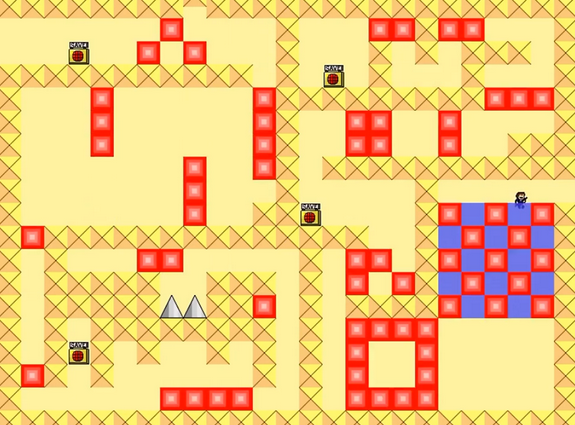
The main Tokoroten adventure that I think about a lot is I Wanna Go The Dotkid! which I think is one of the games that encapsulates this hypothetical “avoidanceventure” genre the most. There’s some pure-ish needle but the game features a lot of cycles and avoidance-like obstacles combined with platforming. You might be familiar with this even if you haven’t seen the whole game because the rooms used in K2/K3, but there’s more examples.
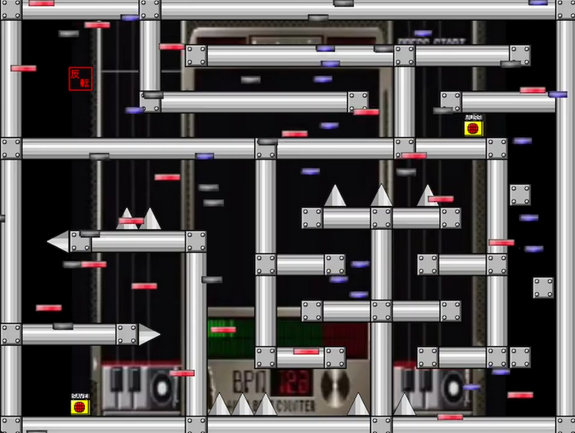
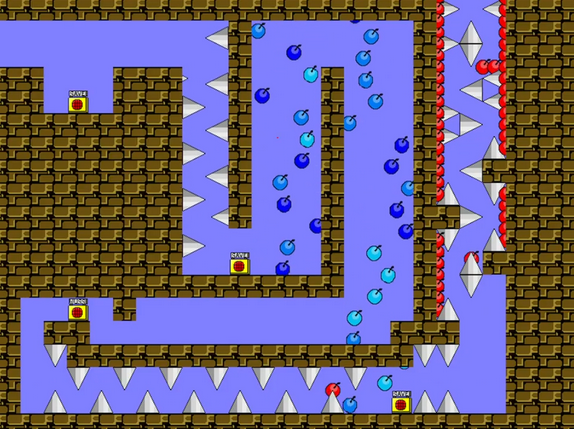
The first image in particular is from a really cool stage with a bunch of rhythm game references and obstacles. Coincidentally Maze also has a section with something similar. There’s not too much in Dotkid that is really that crazy but it has this special charm to it. It has a lot of fun little things throughout that make me like it a lot even if it’s not too popular. It also has fun avoidances, there’s a certain style of older vocaloid avoidance that Tokoroten does super well, I’ll probably talk about older avoidances I like one day because I think there’s a lot of interesting stuff there.
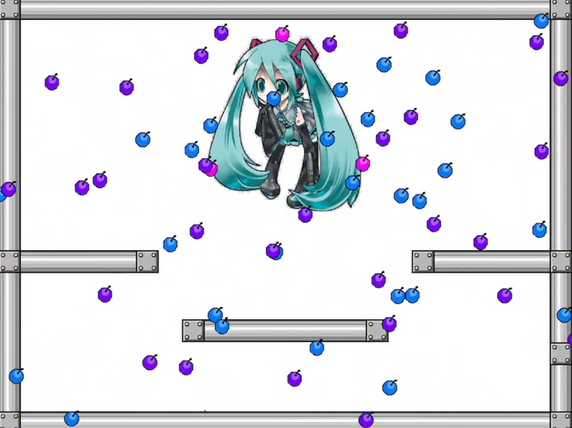
There’s really not many games that fall into this niche that I’ve outlined, and the examples I’ve provided here are older. With that being said I think RNG Dungeon is a pretty good look into something more modern that feels like an “Avoidanceventure.” I think this game embodies that design philosophy I mentioned in Maze, where there’s new ideas at every turn and it never really lingers on one thing too long. It’s pretty cool to see, and similar to the games mentioned above, it’s also made by primarily avoidance makers, so you see slightly more unconventional level design than you might expect from a fangame.
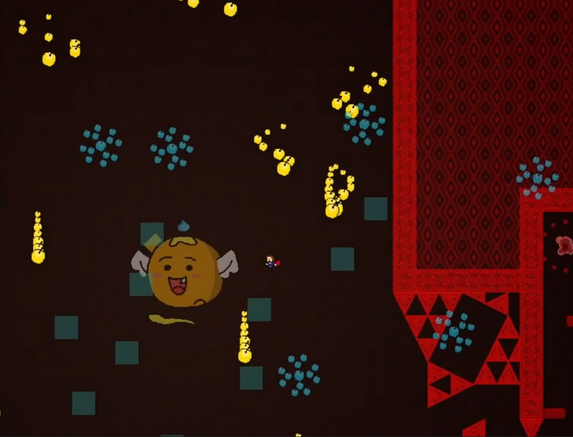
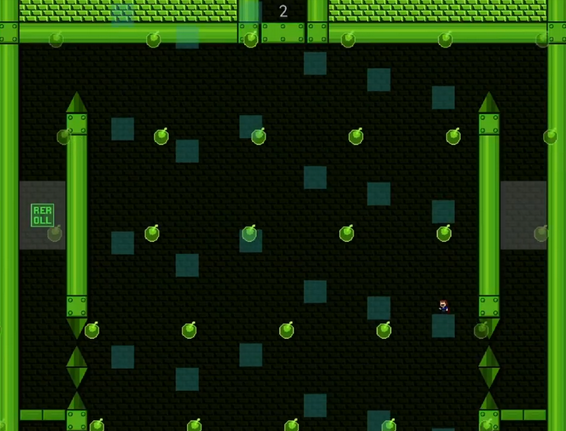
Of course RNG Dungeon has a bit more polish than games nearly 10 years older than it. I think whether or not that’s a good thing is up to personal taste. It’s really cool but there’s a bit of magic to older fangames that’s hard to replicate. With that being said I’d love to see more games which incorporate this kind of gameplay into an adventure game format. One last game that frequently gets overlooked I think is I Wanna Be The Disgust.
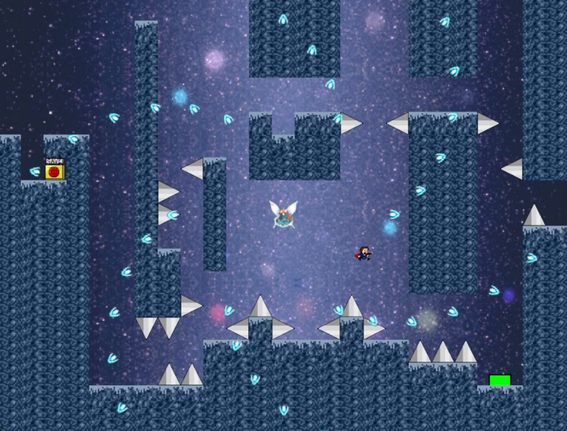
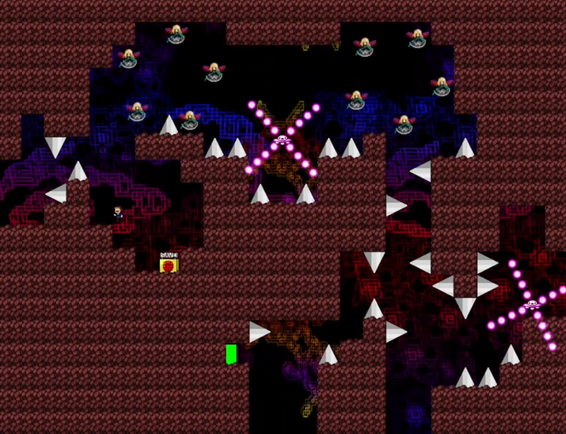
In a lot of ways Disgust is like the ultimate fusion of Bullet Hell and Platforming. It’s very much “Cycle Needle” in a sense but the cycles are a bit different from just “apples that move in a pattern.” The stuff that you deal with feels a lot more like proper attacks overlayed on the platforming, and you end up having to find ways to dodge it while making progress on the screen. It’s not that different from cycle needle if you look at it from a distance but when you play it, there’s something there that just feels different. The whole context in which you avoid the “cycle” is completely different. I think if there’s one game you should try out if you haven’t played anything here, it should be this one. It’s not crazy hard and I think has broader appeal than something like Maze or Dotkid. This kind of cycle is really underutilized I think, there’s a lot of potential in it. You can find more examples of it in I Wanna Beat The Mushcat (which is by the same maker) and also one particular stage in I Wanna Be The Odyssey.
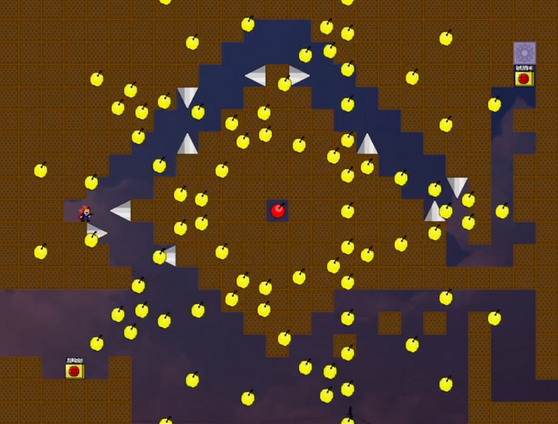
I doubt “Avoidanceventure” will ever really catch on but I think the games I’ve outlined here all have a special place somewhere in my heart. I really value unique experiences and all of these games have their own way of making an adventure game stand out from the pack. I would love to see more games that make me feel like this in the future, it’s always a really special thing that only fangames can make me feel.